France integrates ten European nations into nuclear deterrence network
Paris is deploying Rafale jets and building intelligence links with allies as doubts grow over Washington's long-term security commitments.
By Maya Shah ·
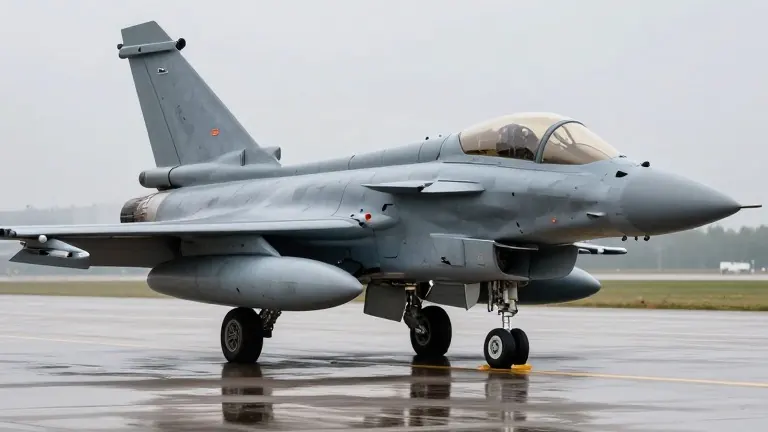
France has linked its nuclear deterrence capabilities with ten European nations to counter Russian aggression, according to a report by the Wall Street Journal released on Monday. The initiative, termed forward deterrence, aims to strengthen Paris's position as a continental nuclear power amid declining European confidence in the United States.
The project involves constructing new infrastructure and establishing communications, early-warning, and intelligence-sharing connections. It also includes the deployment of French nuclear-capable Rafale fighter jets across partner states. The United Kingdom, Germany, Poland, the Netherlands, Belgium, Finland, Norway, Sweden, and Denmark have joined the effort to varying degrees since President Emmanuel Macron announced the plan in March.
Finnish President Alexander Stubb described his country's participation as a long-term strategic adjustment. "We don't have any plans to put nuclear weapons on Finnish soil in peacetime. But we do have plans for creating a strategic dilemma for Russia," Stubb said. He characterized the integration as a ten to fifteen-year process designed to enhance security through information sharing.
French officials have conducted bilateral talks with each partner rather than holding joint meetings. Senior defense officials told the WSJ that this approach has led European governments to maintain constant contact to compare the specific commitments Paris has made to each nation.
The shift reflects growing skepticism in Europe regarding American reliability. Concerns have intensified over whether Washington would risk nuclear war to defend an ally, particularly as US President Donald Trump pursues energy deals with Russian President Vladimir Putin and increases pressure on Ukraine.
French adviser Chatel argued at the Warsaw Security Conference that Paris carries greater deterrence credibility because it shares geography and economic continuity with its neighbors. "There is one difference between France and the US: we share the same geography, we are part and parcel of the same continent," Chatel said. Norwegian Foreign Minister Espen Barth Eide stated that the new plan supplements existing US guarantees rather than replacing them.
Macron announced that France will resume producing nuclear devices for the first time in decades and will classify the size of its stockpile. The nuclear force will remain under sole French control. A European minister noted that France allows participation in its deterrence to a similar degree as the United States. Officials selected this structure to make the strategy acceptable across the French political spectrum, including to Marine Le Pen's far-right party, which leads polls ahead of next spring's presidential elections.
Source: The Jerusalem Post